
Academic Programme
Fundamental Research in Subatomic Physics
Accéder aux sections de la fiche

Call to actions
Brochure(s)
Details
Language of instruction
The programme is taught in English. A good command of the English language is required (87 TOEFL / 785 TOEIC / 5.0 IELTS / B2).
Skills
- Master advanced concepts in nuclear, particle and astroparticle physics.
- Perform high-level experimental research, from detector design to data analysis.
- Use modern simulation frameworks and statistical tools to model complex physical processes.
- Apply artificial intelligence and machine learning techniques to large-scale scientific data.
- Develop strong problem-solving, programming and project management skills.
- Communicate research results effectively in international academic and professional contexts.
Carrer Opportunities
Sectors
Occupations
- Higher education and fundamental research
- High-tech industries (detector development, instrumentation, aerospace, medical imaging, nuclear technologies).
- Data science, artificial intelligence, and Big Data applied to scientific and industrial challenges.
- High-performance computing, modeling, and simulation for physics and engineering.
Occupations
- PhD researcher leading to careers as scientist, lecturer, or professor.
- Research engineer in large research organizations (CNRS, CEA, etc.).
- Detector and instrumentation engineer (medical physics, space technologies, security).
- Data scientist or machine learning engineer in high-tech companies.
- Project manager in innovative sectors requiring advanced modeling and analysis.
Introduction
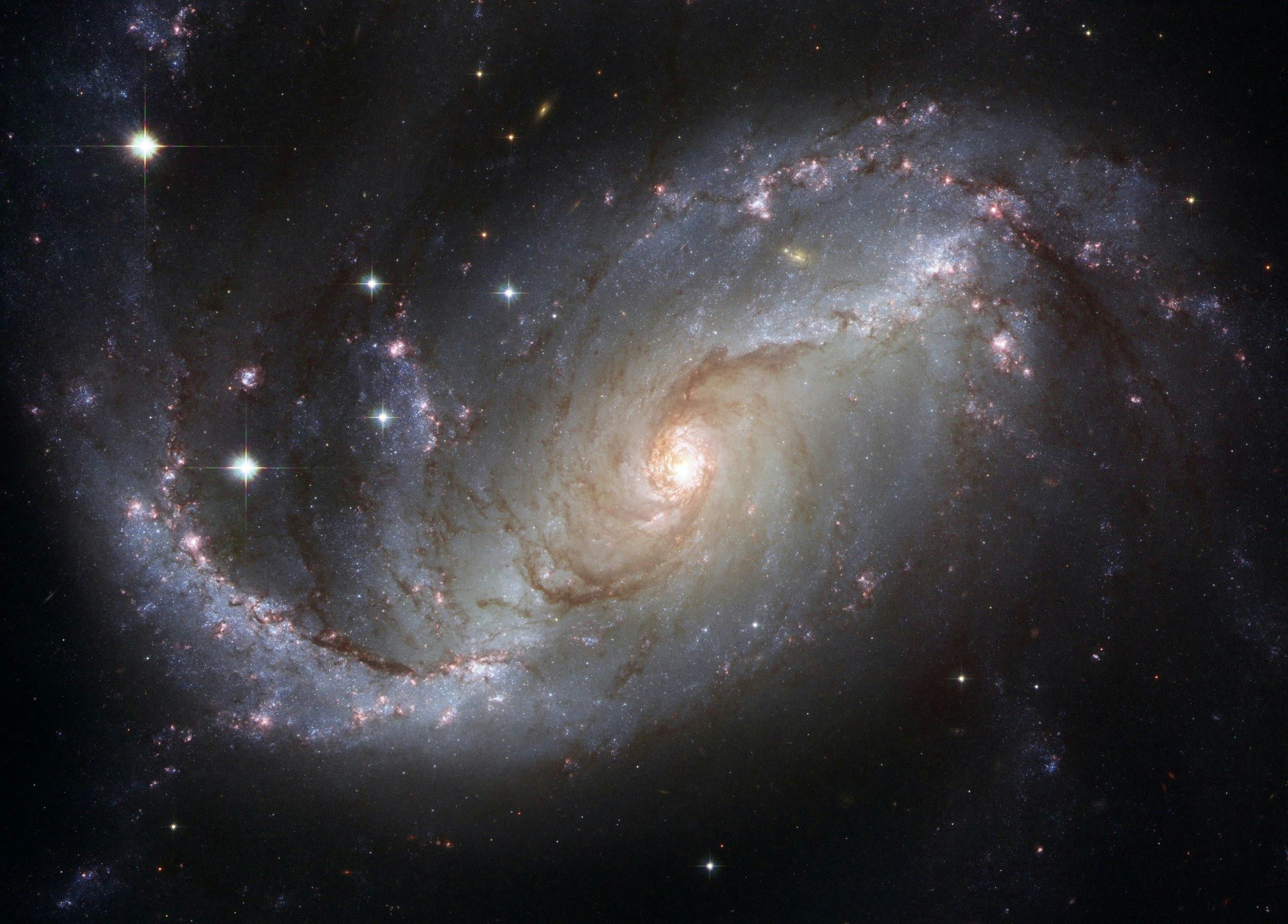
Explore the Universe, from the infinitely small to the infinitely large.
The Master’s in Research in Subatomic Physics (RPS) at Nantes Université offers a unique training programme in nuclear physics, particle physics, and astrophysics. Designed to prepare students for PhD research in top laboratories in France and abroad, it also equips them with highly transferable skills in data science, advanced computing, and high-tech innovation. Combining theory, experiments, and cutting-edge data analysis, the program opens the way to careers in both fundamental research and the private sector, from academia to Big Data, nuclear energy, and beyond.
The Master’s in Research in Subatomic Physics (RPS) at Nantes Université offers a unique training programme in nuclear physics, particle physics, and astrophysics. Designed to prepare students for PhD research in top laboratories in France and abroad, it also equips them with highly transferable skills in data science, advanced computing, and high-tech innovation. Combining theory, experiments, and cutting-edge data analysis, the program opens the way to careers in both fundamental research and the private sector, from academia to Big Data, nuclear energy, and beyond.
Places
Nantes
Programme Leader(s)
Our partners
Research center
Hosting research lab:
SUBATECH, Subatomic Physics and Technologies
SUBATECH, Subatomic Physics and Technologies
Admission
Entry requirement
Academic requirement
Academic prerequisites:
Apply for Master 1 programme: Licence or bachelor degree in Physics or Physics-Chemistry
Apply for Master 1 programme: Level equivalent to a Master 1 in Astrophysics or Subatomic Physics
Linguistic prerequisites :
Apply for Master 1 programme
A minimum level of B2 in French is required, applicants must provide one of the following:
- TCF level 4 (B2), with a minimum score of 14/20 in written expression.
- DALF or DELF B2, with a minimum score of 65/100.
- DUEF B2 from Nantes Université, with a minimum average of 14/20.
- French-speaking nationals or students who have completed their entire Bachelor’s degree in French (see the list of eligible countries at Admission to Nantes University).
Apply for Master 2 programme
A minimum level of B2 in English (or equivalent) is required. Applicants must provide a recognised certificate of English language proficiency, such as the Cambridge, TOEFL, TOEIC, or IELTS.
Applicants are exempt from providing an English language certificate if they:
- are nationals of an English-speaking country; or
- hold a Bachelor’s degree (or equivalent) awarded by a higher education institution in an English-speaking country.
A minimum level of French proficiency is recommended to facilitate students’ integration into everyday life in France.
Application
Application procedure
Application procedure for the 2027-2028 academic year
If you are a French national or a citizen of the European Economic Area + Switzerland, Monaco and Andorra and you wish to apply for the first year of the Master's (M1): please use the Mon Master platform.
If you are a citizen of, or currently residing in, the European Economic Area + Switzerland, Monaco or Andorra and you wish to apply for the second year of the Master's (M2), please use the Graduate programme application platform*.
You are a citizen of a country outside the European Economic Area + Switzerland, Monaco and Andorra :
- Your country is concerned by the Campus France procedure (cf.: List of countries concerned): you must apply exclusively via the Graduate programme application platform*. Please note that applications are generally submitted between October of the year preceding your intended enrolment and March of the year of entry.
- Your country is NOT concerned by the Campus France procedure :
- To apply for M1, please use the Mon Master platform.
- To apply for M2, please follow the Graduate programme application platform*
For further information, please consult our Admission to Nantes University page.
*Note : Please create an Adullact account to start your application. The Graduate programme application platform open from OCTOBER 1st , 2026 to MARCH 15th , 2027
Documents required:
- A CV written in English or French
- A motivation letter written in English or French
- A recommendation letter
- Academic transcripts
- Proof of language proficiency
- Valid ID (Passport)
Additional information:
- Tuition fees and Scholarships
- Budget estimation
- Welcome grant: Graduate programmes offer a €1,500 Welcome Scholarship for the best international students. Please prepare your application carefully to demonstrate your motivation for the programme.
- Internship: You may complete your internship abroad, with our financial support depending on the host country and the length of your internship. If you choose to do it in France, you will receive financial support of approximately €600 per month.
Programme
MASTER 1 :
First Semester (27 ECTS)• Statistical physics (4 ECTS)
• Signal Acquisition and Processing I (2 ECTS)
• Quantum physics (4 ECTS)
• Atomic physics (3 ECTS)
• Subatomic physics (4 ECTS)
• Detector physics (5 ECTS)
• Statistical methods (4 ECTS)
• Knowledge of Organizations (1 ECTS)
• Optionnal: English TOEIC© preparation
Second Semester (33 ECTS)
• Informatics (1 ECTS)
• Experimental project (8 ECTS)
• Signal Acquisition and Processing II (1 ECTS)
• Experimental physics (3 ECTS)
• Standard Model and Beyond I (2 ECTS)
• Nuclei, Astronuclear and Compact Objects
Compact Objects (4 ECTS)
• Cosmology and field theory (4 ECTS)
• Internship (10 ECTS)
MASTER 2 :
Third Semester (30 ECTS)• PROJECT: Theory and Analysis (3 ECTS)
• Detection (2 ECTS)
• Astroparticles and Multimessengers (1 ECTS)
• Nuclei and Astronuclear (2 ECTS)
• Standard Model and Beyond I (5 ECTS)
• Standard Model and Beyond II (4 ECTS)
• Quantum Field Theory (3 ECTS)
• Soft Skills (3 ECTS)
• Fundamentals of Nuclear Physics (1 ECTS)
• Experimental project (3 ECTS)
• Modelisation (3 ECTS)
Fourth Semester (30 ECTS)
• A 4 to 6 months internship
What's next?
Level of education obtained after completion
Bac+5
(Unknown label)
Competencies acquired
- Master advanced concepts in nuclear, particle and astroparticle physics.
- Perform high-level experimental research, from detector design to data analysis.
- Use modern simulation frameworks and statistical tools to model complex physical processes.
- Apply artificial intelligence and machine learning techniques to large-scale scientific data.
- Develop strong problem-solving, programming and project management skills.
- Communicate research results effectively in international academic and professional contexts.
Further studies
After graduating in 2024, 9 students out of 10 started a funded PhD.
Career opportunities
Business sectors
Sectors
Occupations
- Higher education and fundamental research
- High-tech industries (detector development, instrumentation, aerospace, medical imaging, nuclear technologies).
- Data science, artificial intelligence, and Big Data applied to scientific and industrial challenges.
- High-performance computing, modeling, and simulation for physics and engineering.
Occupations
- PhD researcher leading to careers as scientist, lecturer, or professor.
- Research engineer in large research organizations (CNRS, CEA, etc.).
- Detector and instrumentation engineer (medical physics, space technologies, security).
- Data scientist or machine learning engineer in high-tech companies.
- Project manager in innovative sectors requiring advanced modeling and analysis.
Registration
Tuition fee
The cost refers to education and training costs that includes additional services such as French language classes.
A provisional budget is available on Nantes Université's website.
A provisional budget is available on Nantes Université's website.
Updated on 05 October 2026.